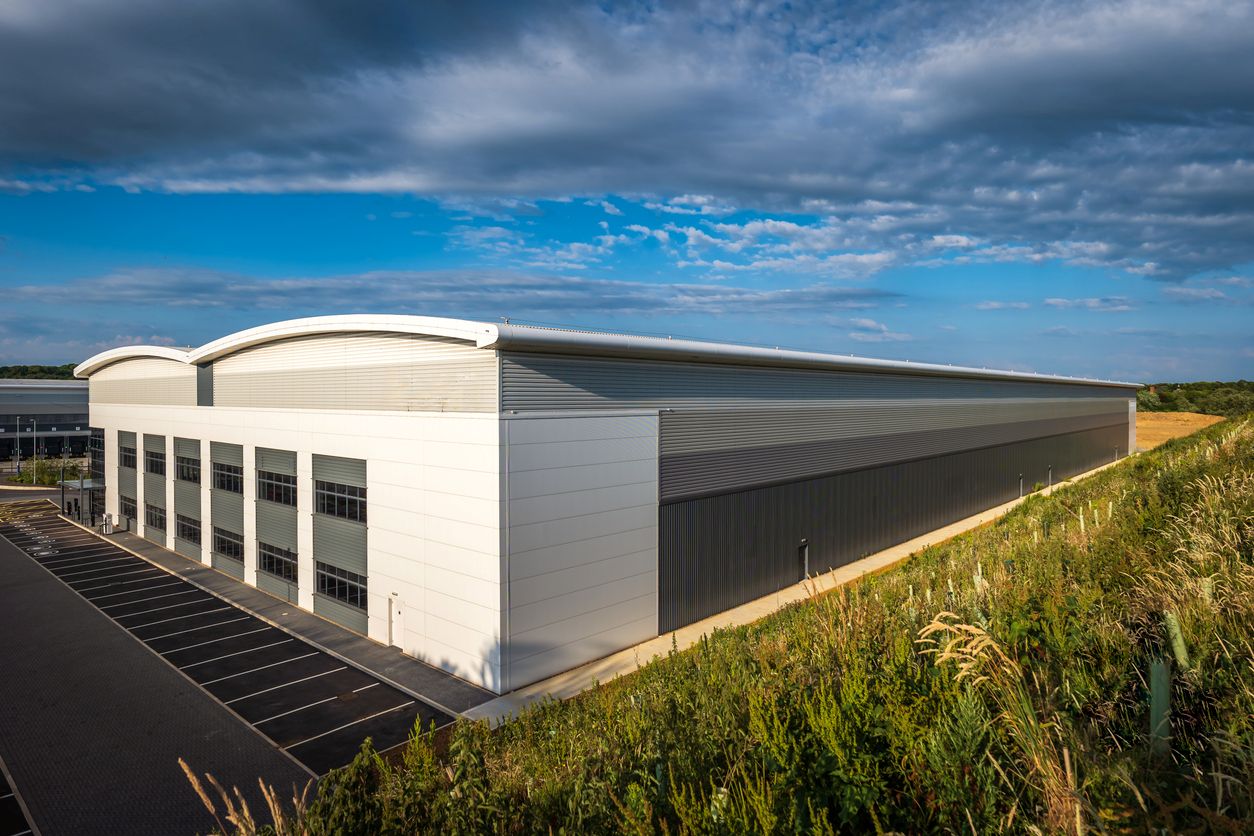
The leaders of all three political groups represented on South Gloucestershire Council have written to the Secretary of State for Housing, Communities and Local Government, calling for urgent action on the 1957 and 1958 planning consents that have allowed developers bypass modern planning rules and blight communities in Pilning and Severn Beach with so-called ‘MegaShed’ buildings.
These historic consents mean that major industrial developments can be built without the modern standards, infrastructure contributions, or community involvement that residents would rightly expect today. The result is development that often brings little direct benefit to local communities and places increasing pressure on local roads, environment, and services.
They also mean that South Gloucestershire Council is unable to influence proposals and is left to legally rubberstamp plans, which is out of step with planning laws in the rest of the district and elsewhere in the country.
The letter is signed by Councillors Maggie Tyrell, Liberal Democrat group and South Gloucestershire Council; Ian Boulton Co-leader of South Gloucestershire Council and Leader of the Labour group; and Liz Brennan, Leader of the Conservative group on the council.
It is clear that their cross-party position is not about opposed to growth, indeed it emphasises that Severnside is a key economic area with significant opportunities. However, it emphasises that growth must be fair, balanced, and supported by the right infrastructure, so that local people can access jobs and communities see real benefits.
Residents are understandably frustrated that developments can proceed without proper safeguards, and Members of all parties have consistently raised concerns about proposals that would not be acceptable under today’s planning system, but cannot be properly controlled. Members recognise the significant frustration, concern and upset experienced by residents and are determined to do all they can to secure meaningful change.
The letter calls on the Government to act, by bringing forward legislation to update these outdated consents and ensure that future development meets modern standards, supports infrastructure investment, and gives communities a meaningful voice.
The Leaders pledge to continue to work together, across party lines, to press for a fair and lasting solution for Severnside.
The full text of the letter, sent on 16 June 2026, is below:
We are writing jointly, as the Group Leaders of South Gloucestershire Council, following a resolution agreed by Full Council regarding the ongoing impact of historic blanket planning consents for industrial uses dating from 1957 affecting the communities of Pilning and Severn Beach.
While we recognise that development taking place under these consents is lawful, the continuation of such arrangements presents a significant and growing challenge to the Council and to the local community. These permissions pre-date modern planning policy and therefore operate outside the framework of contemporary environmental, transport and community infrastructure requirements. As a result:
- Development can proceed without the application of current biodiversity, climate, and design standards
- There is no ability to secure Section 106 contributions or Community Infrastructure Levy funding
- The Local Planning Authority is limited in its ability to attach up to date conditions in respect of any reserved matters applications considered by it
- Development proceeds without the ability to secure contributions towards essential infrastructure, particularly highways and sustainable transport, limiting connectivity to employment opportunities
- Local communities have very limited opportunity to influence development that directly affects them
The cumulative effect is that substantial commercial development, including very large warehouse-style buildings, is occurring without the supporting infrastructure, mitigation or community benefit that would normally be expected. This is not only creating impacts for existing residents but is also constraining the area’s longer-term economic potential. In particular, the inability to secure investment in highways and public transport is limiting access to employment opportunities, especially for residents in less well-connected and less affluent communities. In this way, the current arrangements are not supporting the kind of sustainable and inclusive growth that Government is seeking to promote.
We believe this position is no longer sustainable.
There is also a strong and unified view locally that the current situation is unfair and increasingly difficult to justify. Residents feel that development is being imposed without appropriate safeguards or benefits, and Members across all political groups have expressed consistent concern at Planning Committee about the scale and form of development that cannot be properly moderated under the existing consents. This is not a case of opposition to growth, but a shared concern that the current framework prevents reasonable, balanced decision-making.
Planning should operate as a partnership between developers, local communities, and public authorities, ensuring that growth is balanced, infrastructure is provided, and communities have a meaningful voice.
We are requesting that Government:
- Brings forward, at the earliest legislative opportunity, primary legislation to amend or repeal the 1957 and 1958 blanket consents affecting Pilning and Severn Beach; and
- Establishes a mechanism to regularise these historic permissions, similar in principle to previous approaches taken through the Interim Development Order framework, so that future development is subject to modern planning standards and local decision-making processes
We fully recognise that this is a complex issue. Any legislative approach will need to carefully consider established development rights, legal protections for landowners, and the potential for compensation claims. We would welcome the opportunity to work with officials to explore proportionate and deliverable options that balance these considerations while addressing the clear inequity currently experienced by local communities.
This is a locally acute issue, but one that raises wider policy questions about how historic consents are treated in a modern planning system. We believe South Gloucestershire could provide a useful case study in developing an approach that is fair, lawful, and capable of wider application if necessary.
We would be grateful for the opportunity to meet with you or your officials to discuss this matter further and to support the development of a practical and deliverable solution.
The letter was written following a cross-party motion agreed by Full Council on Wednesday 20 May 2026. Full details are available on the council website: https://council.southglos.gov.uk/documents/s167526/Motion%201%20of%2026-27%20-%201957%20consent.pdf